
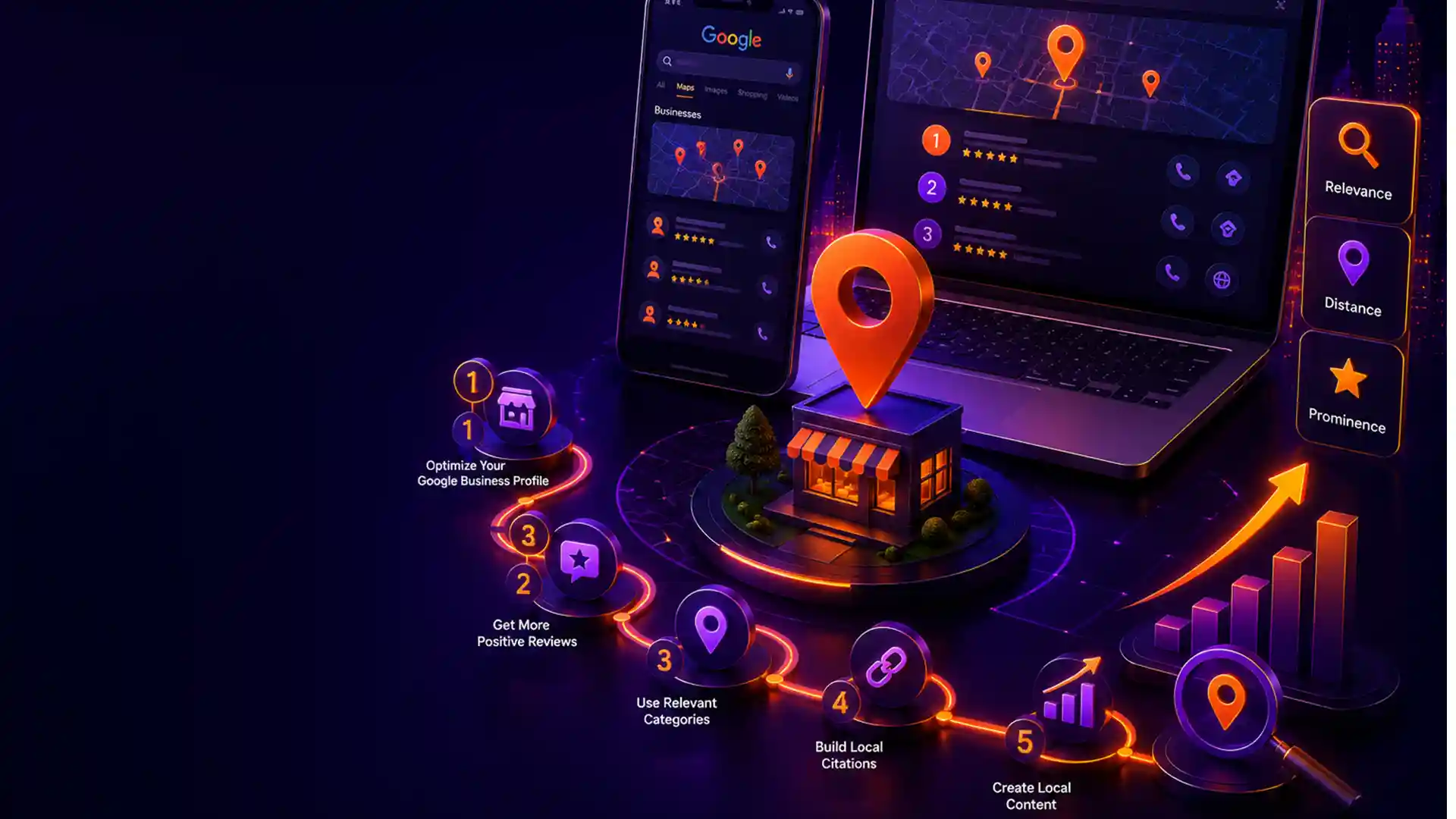
When someone searches "plumber near me" or "cafes in Perth," the first thing they see isn't a list of blue links - it's the Map Pack: three business listings with a map, sitting above everything else. Landing in one of those three spots can send more calls and walk-ins than the rest of your marketing combined. Here's exactly what decides who gets there, and how to influence it.
WHAT'S IN THIS GUIDE
What Is the Google Map Pack?
The Map Pack (also called the local pack) is the block of three business listings and a map that Google shows at the top of search results for location-based queries. It sits above the standard organic results, which means a business ranking in the Map Pack can outrank competitors with stronger overall domain authority simply by winning on local signals.
Google has confirmed that three core factors decide who appears in those three spots: relevance, distance, and prominence. Understanding each one is the difference between guessing at local SEO and actually improving your ranking.
Factor 1: Relevance
How Well Your Profile Matches the Search
Relevance measures how closely your Google Business Profile and website match what the searcher is looking for. A generic or incomplete profile struggles to match specific searches, even if your business genuinely offers that service.
Choose the most specific primary category available, add relevant secondary categories, list your services with full descriptions, and make sure your website content clearly reflects the exact services you want to rank for.
Factor 2: Distance
How Close You Are to the Searcher
Distance measures the physical proximity between your business location (or defined service area) and the person searching, or the location implied in their search. This is the one factor you can't fully control, but you can still influence it.
Make sure your Google Business Profile address is accurate to the metre, set a precise service area if you don't have a public storefront, and create dedicated content for each suburb or region you genuinely serve.
Factor 3: Prominence
How Well-Known and Trusted You Are Online
Prominence reflects how established and reputable your business appears based on signals across the web — review count and rating, citation consistency, backlinks, and how often people search for your business by name. This is the factor most within your control, and the one that compounds fastest over time.
Build a steady flow of new Google reviews, keep your NAP (name, address, phone) consistent across every directory, earn backlinks from other local sites, and post regular updates to your Google Business Profile.
Step-by-Step: How to Improve Your Ranking
Audit your Google Business Profile
Check that your category, hours, description, and photos are complete and accurate before making any other changes.
Fix NAP inconsistencies
Search your business name and check every directory listing matches your Google Business Profile exactly.
Start a consistent review request process
Ask every satisfied customer for a review at the moment they're happiest, rather than relying on occasional bulk requests.
Build location-specific website content
Create a genuine, unique page for each suburb or area you serve, rather than one generic "areas we cover" list.
Earn a handful of local backlinks
Sponsorships, local directories, and partnerships with nearby businesses all send prominence signals competitors from outside the area can't easily match.
Post to your profile regularly
An active profile with recent posts and photos signals to Google that your business is genuinely operating and engaged.
Track your ranking and repeat
Local rankings shift often. Check your position monthly and keep reinforcing whichever factor is weakest for your business.
How Long It Takes to See Movement
Most businesses see some ranking movement within 4-6 weeks of fixing major profile and citation issues. Meaningful, stable top-3 rankings for competitive searches typically take 3-6 months, since prominence signals like reviews and backlinks build gradually rather than overnight.
Frequently Asked Questions
What is the Google Map Pack?
The Map Pack, also called the local pack, is the group of three business listings with a map that Google shows at the top of search results for location-based searches, above the regular organic results.
What are the top ranking factors for the Google Map Pack?
Google's local ranking is primarily based on relevance, distance, and prominence. Relevance measures how well your profile matches the search, distance measures proximity to the searcher, and prominence reflects your reviews, citations, and overall online authority.
Can I rank in the map pack without a physical storefront?
Yes. Service-area businesses can rank in the map pack by setting a defined service area on their Google Business Profile and hiding their address, as long as they meet Google's eligibility requirements for that category.
How often does the map pack ranking change?
Map pack rankings can shift frequently, sometimes daily, based on competitor activity, new reviews, and Google algorithm updates. Consistent, ongoing optimisation matters more than a one-time setup.